Reserve
your unit
today!
your unit
today!
 wonderproperties3@gmail.com
Wonder Properties © All rights reserved
Privacy PolicyPowered bykarimcgvisuals
wonderproperties3@gmail.comWonder Properties © All rights reserved
Privacy PolicyPowered bykarimcgvisuals
Blog | April 15, 2026
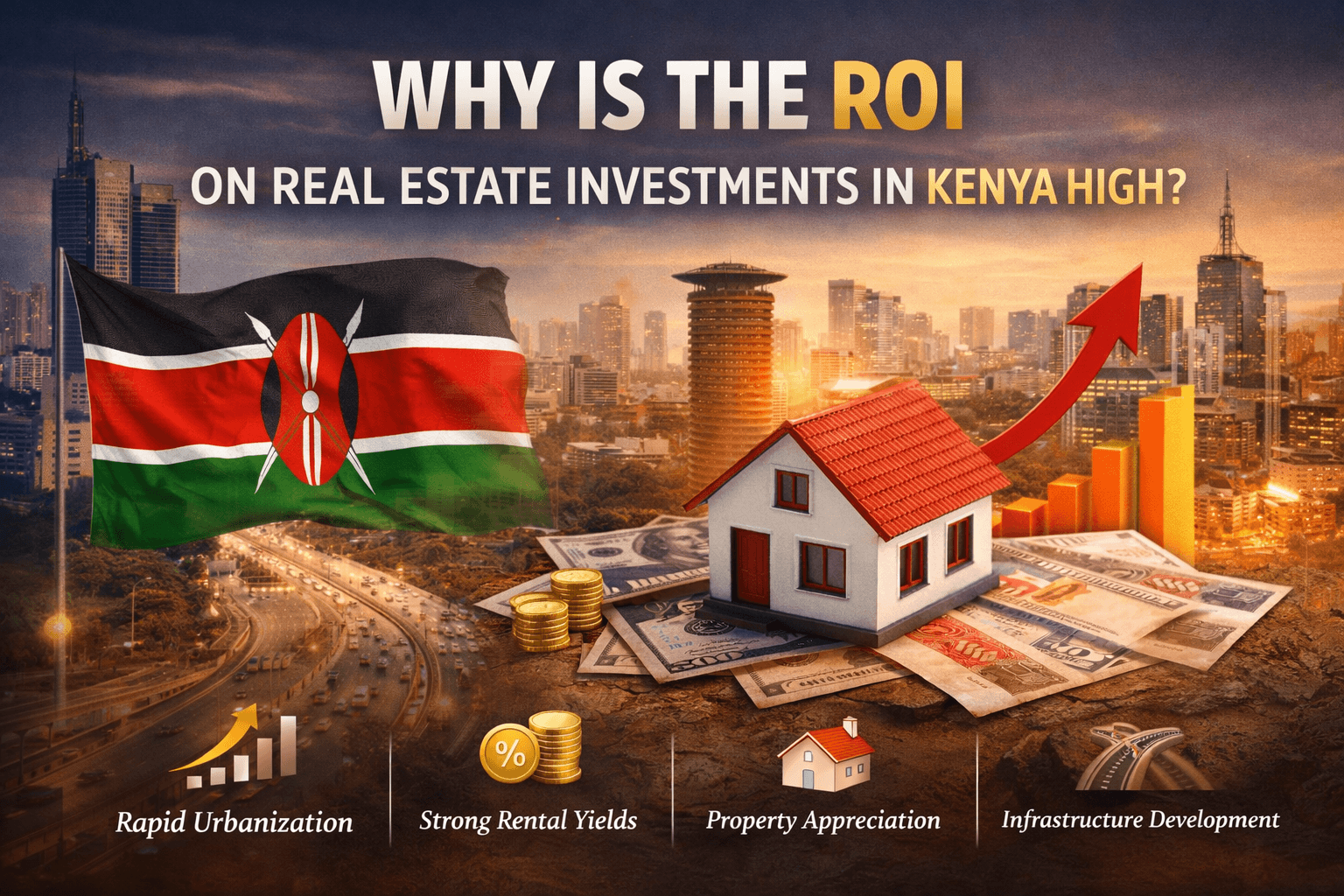
The ROI (Return on Investment) in Kenyan real estate tends to be high because several powerful forces are working at the same time—demand is rising, supply is constrained in key areas, and property values keep appreciating.
Will I get my money back?… That’s a big question for investors anytime they invest in a business. Real estate has proven to be an investable business with high net profits, if done right. Returns are there, no doubts about it.
The ROI (Return on Investment) in Kenyan real estate tends to be high because several powerful forces are working at the same time—demand is rising, supply is constrained in key areas, and property values keep appreciating.
Here’s the real breakdown (this is exactly how smart investors think about it) :
1. Rapid Urbanization = Constant Demand
Kenya—especially Nairobi—is growing fast. More people are moving to cities for jobs and business. This creates constant demand for housing and office space. In Kenya alone there’s a 2million housing deficit which essentially means the population housig needs are not being met.
High demand = high occupancy rates + steady rental income.
That’s why landlords rarely struggle to find tenants in prime areas
2. Strong Rental Yields (Cash Flow Game)
Kenya offers better rental returns than many global markets:
Compare that to cities like London or New York (~3–6%), and you see why investors love Kenya
You’re earning income while the property still appreciates.
3. Property Value Appreciation (The Real Money)
Real estate in Kenya doesn’t just pay rent—it grows in value. Land and property prices have steadily increased over the years.
Some prime areas have even doubled in value over a decade
This is where wealth is built:
Buy → Hold → Sell later at a higher price
4. Infrastructure Development Boosts Prices
Major projects like: Roads & bypasses, Expressways & SGR railway …open up new areas and push property prices up fast.
Investors who buy early in these “growth corridors” see massive ROI.
5. Affordable Entry Compared to Global Markets
Kenya is still relatively cheap to enter compared to global cities: Lower purchase prices.
But still high rental demand
This creates a sweet spot: low cost + high returns
6. Housing Shortage (Undersupply Problem)
There’s a housing deficit, especially in urban areas.
Demand > supply. Developers can’t keep up.
150,000–200,000 houses are needed annually due to rapid 4.4% urbanization and low supply. 50,000 units are built yearly, with only 2% targeting low-income earners, causing high rent burdens and slum expansion.
This keeps: Prices rising, Rent levels strong
7. Multiple Income Strategies
Unlike some markets, Kenya gives you options:
More strategies = more ways to maximize ROI
8. Growing Middle Class + Diaspora Money
The interplay between a growing middle-income class and the diaspora is driving significant economic shifts in Kenya, particularly in real estate. With over 70% of Kenya's urban population falling into the middle-income bracket and over 4 million Kenyans in the diaspora, these two groups are accelerating demand for quality housing, investment products, and lifestyle services
Rising middle class = more renters and buyers
Diaspora investors are injecting capital into property, this keeps the market liquid and active.
9. Real Estate as an Inflation Hedge
Real estate acts as an inflation hedge by typically increasing in value and generating higher income during inflationary periods, often outperforming or maintaining purchasing power compared to traditional assets. It achieves this through rising property values (appreciation), increasing rental income, and the use of fixed-rate debt, which allows investors to repay loans with "cheaper" money over time
When inflation rises > Construction costs go up > Property prices and rent increase
So real estate protects and grows wealth over time.
The Bottom Line
ROI is high in Kenya because of this powerful combination:
High demand + rising prices + strong rental income + ongoing development
That’s rare—and that’s why serious investors keep coming in.