Reserve
your unit
today!
your unit
today!
 wonderproperties3@gmail.com
Wonder Properties © All rights reserved
Privacy PolicyPowered bykarimcgvisuals
wonderproperties3@gmail.comWonder Properties © All rights reserved
Privacy PolicyPowered bykarimcgvisuals
Blog | March 21, 2026
Rising building collapses reveal the urgent need for stricter enforcement, responsible development, and informed property investment.
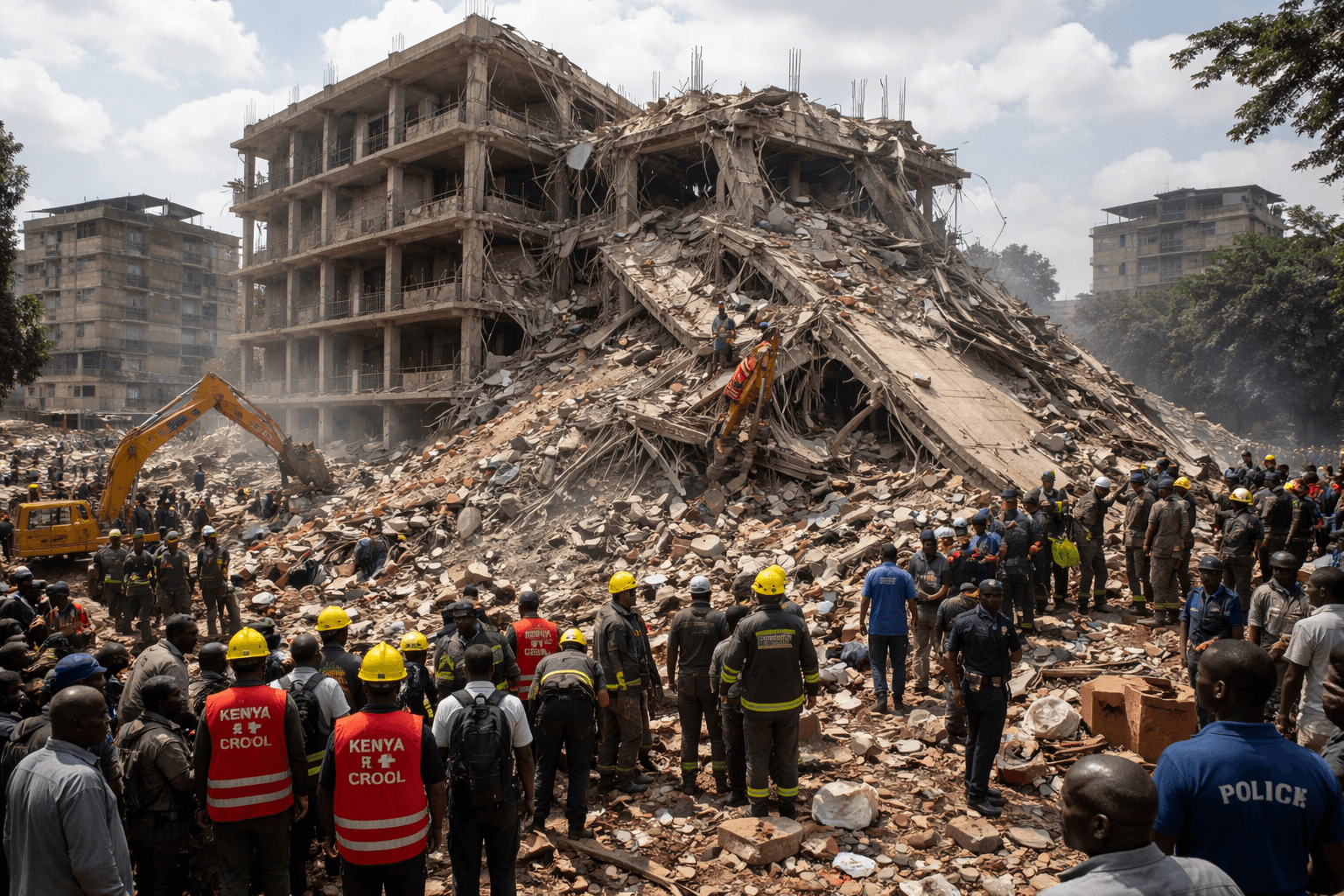
The collapse of buildings under construction in Kenya, is a tragic reminder of the risks that continue to plague the real estate sector. With lives lost and several people injured in the tragedies, it has repeatedly raised serious concerns about construction standards, developer credibility, and regulatory enforcement in Kenya.
More than 200 collapses have been recorded since 1996 signalling a systemic crisis within the construction industry. To paint a grim picture of how critical the situation is; according to a 2025 SBE report, 87% of the audited buildings by the National Buildings Inspectorate in 2025 failed to comply with building standards and requsite approvals. During the same period, the National Construction Authority NCA also issued 13,348 suspension of work notices, pointing to persistent enforcement and compliance gaps in the industry.
Weaknesses at every stage produce tragic outcomes. In 2025, in South C, Nairobi, a multi-storey building under construction collapsed under controversial circumstances. Investigations revealed that the developer had exceeded the approved number of floors, constructing up to 14 levels despite clearance for only 12. Even more alarming was the fact that a stop-work order issued by authorities had reportedly been ignored. Preliminary findings pointed to structural overload and blatant disregard for regulations as key causes of the collapse. Several individuals were feared trapped beneath the rubble, highlighting once again how negligence in construction can have life-threatening consequences. This pattern of non-compliance and weak enforcement continues to expose a dangerous gap in the real estate sector.
Arguably, one of the biggest challenges in Kenya’s real estate sector is the presence of unqualified or profit-driven developers who prioritize speed and cost-cutting over safety. In a market where demand for housing is high, some developers bypass critical processes such as soil testing, structural integrity assessments, and adherence to zoning regulations. Structural failure extend beyond technical issues to include governance challenges such as political inteferences, bypassing of established procedures, poor construction sequencing and weak inspection and enforcement. The result almost always is compromised buildings that pose a danger not only to occupants but also to construction workers and surrounding communities.
This is why choosing a trusted and reputable developer is not just a preference; it is a necessity. A reliable developer invests in proper planning, hires qualified engineers, follows legal approvals, and uses high-quality materials. They also maintain transparency with clients, ensuring that buyers understand what they are investing in.
For investors and homebuyers, due diligence is key. Before committing to any property, it is essential to verify the developer’s track record, confirm that all approvals are in place, and ensure that the project complies with safety standards. Visiting the site, asking for documentation, and working with credible agents can significantly reduce risk.
At a time when real estate continues to be one of the most attractive investment options in Kenya, safety must remain a top priority. Developments that prioritize structural integrity and long-term value offer not just returns on investment, but peace of mind.
For developers, it is a reminder that cutting corners can have devastating consequences. For buyers, it is a call to be more vigilant and intentional when choosing where to invest. Ultimately, real estate is not just about buildings, it is about lives and every investment decision should reflect that reality.